From the OR to the World: What a Surgical Light with Camera Does for Training, Telemedicine and Documentation
Aug 20, 2026
Surgical Light with Camera: Training, Telemedicine & Documentation
Every surgeon remembers the moment they truly learned a procedure. For most, it wasn't in a lecture hall — it was standing at the operating table, watching a master's hands. The problem has always been scale: only so many people can crowd around a surgical field before they stop seeing it.
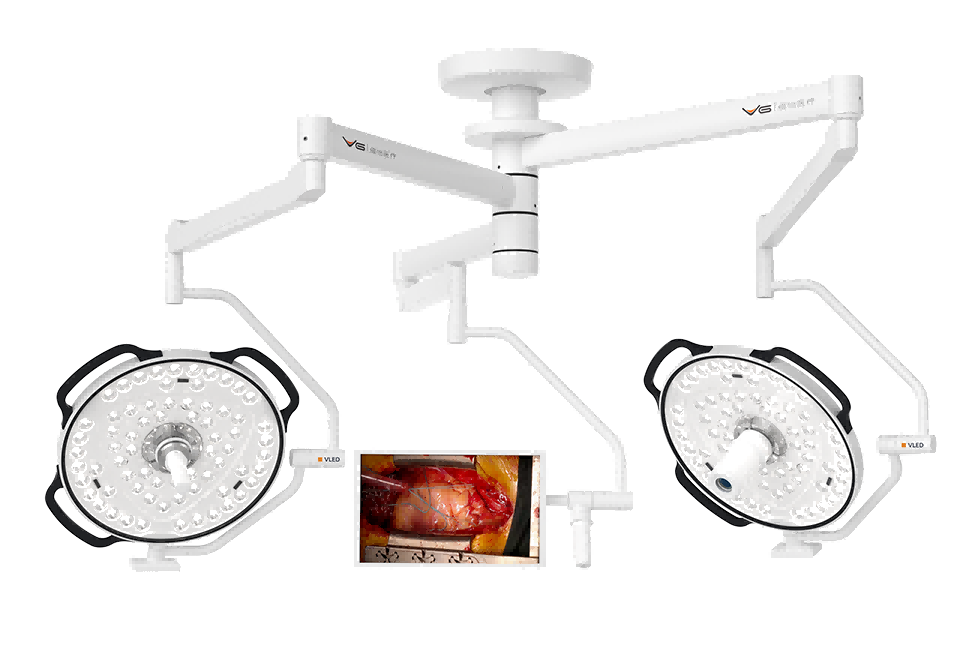
The surgical light with camera changes that equation. By placing a camera inside the lamp head — directly above the sterile field — it captures exactly what the surgeon sees, then sends that view anywhere: to a lecture hall across the campus, to a specialist across an ocean, or to an archive that will outlive the case itself.
We've written a complete buying guide for camera-equipped surgical lights covering specs and selection. This article is about the other side of the question: what the technology actually does for surgical teams once it's installed — in training, in remote medicine, and in everyday clinical documentation.
The Camera View: Why the Lamp Head Is the Best Seat in the House
Before diving into applications, it's worth understanding why the lamp head — of all places — is the ideal camera position.
A surgical light sits directly above the operative field and moves with it. A camera housed in that lamp head inherits three things no other camera position can offer:
The surgeon's perspective. The view looks straight down the surgical axis, the way the surgeon sees it — not an angled shot from a wall or a shaky handheld feed.
Shadow-free framing. Because the camera sits within the shadowless illumination system, the field is lit evenly, with the high color rendering the light itself provides.
Zero footprint. No additional boom arm, no cart, no cable crossing the floor, no staff member assigned to hold or reposition a camera. Once the light is positioned, the camera view follows automatically.
In other words: the light was already in the perfect position. Adding the camera there costs the OR nothing and gains it everything.
Surgical Training: Turning Every Operation into a Teaching Opportunity
Live broadcast to the lecture hall
In teaching hospitals, the classic scene — a dozen students scrubbing in and out just to catch a glimpse of the field — is disappearing. With a surgical light camera, the procedure streams live to a conference room or auditorium, where residents watch the full field in high definition, discuss it openly, and ask questions in real time without interrupting the surgeon.
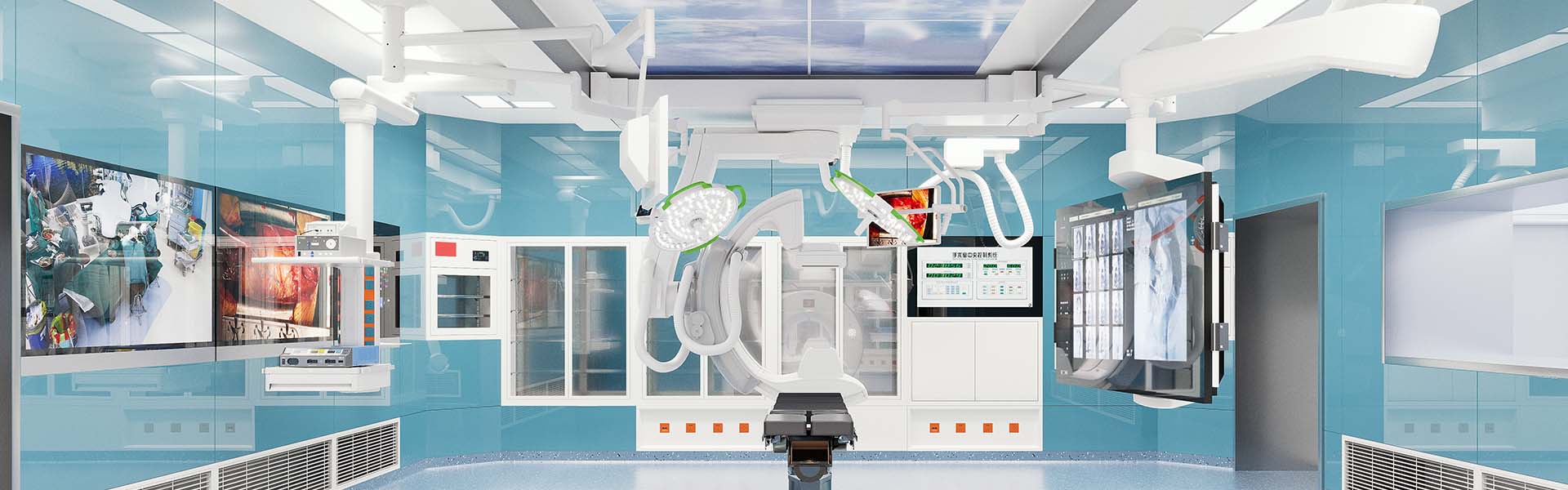
For residents in the OR itself, the same feed on wall monitors means the second assistant no longer depends on a partially blocked view to anticipate the next step.
A reusable video library
Recorded procedures become a permanent teaching asset. A department can build a structured library — indexed by procedure type, approach, and complexity — that serves several purposes at once:
Pre-operative preparation. Residents review the exact procedure they'll assist with the next morning.
Post-operative debriefing. The team replays key moments: where bleeding was controlled, where the anatomy surprised them.
Technique standardization. Comparing how different surgeons approach the same procedure accelerates department-wide consistency.
Exam and credentialing evidence. Video portfolios increasingly support residency assessments and privileging files.
One light, one camera — and every routine case quietly becomes curriculum.
Proctoring without travel
Surgeons adopting new techniques — a new minimally invasive approach, a new implant system — traditionally need a proctor in the room. A light-integrated camera lets the proctor observe remotely in real time, talk the on-site surgeon through the case, and record the session for review. Adoption cycles that once took months of scheduling can compress into weeks.
Telemedicine: Specialist Expertise Where It's Needed, When It's Needed
Real-time remote consultation
Not every hospital can staff every subspecialty. In regional and district hospitals, a surgeon may face a complex trauma or unexpected anatomy with no specialist colleague in the building. A surgical light camera streams the field live to an off-site expert — in the same city or another time zone — who can advise on the next move while the case is still open.
The value here is not futuristic; it's logistical. The view is already there. The network already exists. The only missing piece has always been the camera in the right position — which is exactly what the light provides.
Tele-mentorship for growing programs
Hospitals building new surgical programs (bariatric, spine, oncology) use the same setup in reverse: a senior surgeon at a partner center mentors the local team through their early cases, reviewing recorded sessions afterward. The program scales safely without flying a mentor in for every case.
Connecting the OR to the wider hospital
Even inside one facility, the camera feed has an audience. Anesthesia sees what the surgeon sees and anticipates critical phases. Nursing and circulating staff prepare instruments ahead of demand. ICU teams preview the procedure a post-op patient is coming from. Situational awareness — a documented factor in OR safety — improves across the entire team.
Documentation: An Objective Record of Every Case
Beyond handwritten notes
The operative note records what the surgeon wrote. Video records what actually happened — objectively, with timestamps, and in full color. Departments increasingly pair the two: a concise written note backed by a video file in the patient record or departmental archive.
Quality improvement and M&M review
For quality committees and morbidity & mortality conferences, video turns "what went wrong" discussions from recollection into observation. Complication reviews, near-miss analyses, and workflow studies all benefit from the same recorded feed.
Medico-legal protection
A timestamped video of the procedure is one of the strongest defenses a surgical team can have. When documentation questions arise months or years later, the recording answers them — for the surgeon, the hospital, and ultimately the patient.
Research and publication
Frame-accurate surgical video supports outcome studies, technique papers, and conference submissions. What once required a dedicated videographer now happens automatically on every recorded case.
The Common Thread: The Light Was Already There
Look across all three application areas — training, telemedicine, documentation — and a pattern emerges. None of them required a new invention. They required a camera in the right position, and the right position turned out to be the one piece of equipment that has hung above the surgical field for a century: the operating light.
That's the quiet elegance of the surgical light with camera. It doesn't add a system to the OR. It adds a capability to equipment the OR already relies on — no new ceiling clutter, no new floor footprint, no new staff role.
The VG Medical Foundation
VG Medical Technology has manufactured operating room and ICU equipment since 2003 — surgical lights, operating tables, ceiling supply units, and digital integrated OR solutions deployed in global markets.
For camera-based applications, the VLED series provides the optical foundation that surgical video quality depends on:
Illuminance up to 160,000 lux (adjustable 40,000–160,000 lux) — a bright, stable field for both the surgeon and the camera
CRI (Ra) 97, R9 97, R13 99 — near-perfect color rendering, including saturated reds, so streamed and recorded video shows tissue the way the surgeon sees it
Adjustable color temperature 3,500 K–5,100 K (VLED 7000/7500) with dual-color LED mixing — consistent color even when the light path is partially obstructed, no color shadows in the footage
Endoscopy mode that dims the field automatically when wall monitors take over during minimally invasive procedures
Intelligent multi-zone shadow management for a stable image when heads and hands block the light
60,000-hour LED service life, flicker-free and blue-light-hazard controlled
CE (EU MDR) certification, compliant with IEC 60601-2-41
Configured with a camera module and integrated with VG Medical's digital OR solution, the VLED series becomes the visual backbone for teaching hospitals, telemedicine programs, and documentation-ready operating rooms.
Explore the VLED series surgical lights, read our surgical light camera buying guide, or contact our team to discuss camera configurations and integrated OR proposals for your facility.
Frequently Asked Questions
1. Can one surgical light camera feed be viewed in multiple places at the same time?
Yes. The feed from the lamp-head camera can be routed simultaneously to in-OR monitors, a campus lecture hall, a remote consultant's laptop, and the recording system — depending on the video routing setup. This is standard practice in teaching hospitals: the same live view serves the circulating team, the resident audience, and the tele-consultant without any extra cameras.
2. Do patients need to consent to surgical video recording?
In almost all jurisdictions, yes — recording a procedure for teaching, research, or publication requires informed patient consent, and local regulations (and hospital policy) define the exact scope. Routine archival documentation policies vary by country, so hospitals typically build consent language into pre-operative paperwork. The camera itself is simply the capture device; consent and data handling are governance questions your compliance team should define before recording begins.
3. How is recorded surgical video stored, and what about data privacy?
Recorded video typically flows from the light's video output to an OR recorder or a hospital video management system (VMS), where it is stored on hospital servers or approved cloud infrastructure. Access control, retention periods, and encryption should follow the same standards your institution applies to medical records — HIPAA in the US, GDPR in Europe, or your national equivalent. Most hospital VMS platforms support role-based access and audit trails; discuss requirements with your AV integrator during planning.
4. How is a surgical light camera different from an endoscope or laparoscope camera?
They capture different views for different purposes. An endoscope camera travels inside the body and provides the working view for minimally invasive procedures. A surgical light camera sits above the field and captures the open, external view — the whole operative site, the surgeon's hands, and the flow of the procedure. The two are complementary: during laparoscopic phases, the light's endoscopy mode dims the field while wall monitors show the endoscopic image; when the case returns to open surgery, the light camera view resumes. Many teaching programs archive both feeds side by side.
5. Can a surgical light camera be used to live-stream procedures to conferences or external audiences?
Yes — this is increasingly common at surgical conferences and live-surgery courses. The camera feed streams via the hospital's video system to the event platform, usually with a short delay for safety. The key requirements are patient consent, ethics review per your institution's policy, and sufficient network bandwidth for a stable outgoing stream. The light camera's overhead perspective is often preferred for live courses precisely because it shows the complete operative field without an in-room camera crew.
6. Does live streaming from the OR require special network infrastructure?
For basic remote consultation, a standard hospital network connection is usually sufficient — a 1080p stream needs modest, stable bandwidth. For high-volume teaching broadcasts or multi-site streaming, hospitals typically involve their IT department early to allocate bandwidth, configure secure video channels, and ensure the stream stays inside the institution's security perimeter. A quick bandwidth and firewall review with your IT team during planning avoids surprises on broadcast day.
Planning a teaching, telemedicine, or documentation program for your operating rooms?*Contact VG Medical*— our engineers support project planning, room layout, and video integration from first consultation to installation.
 sales@vg-med.com
 Language