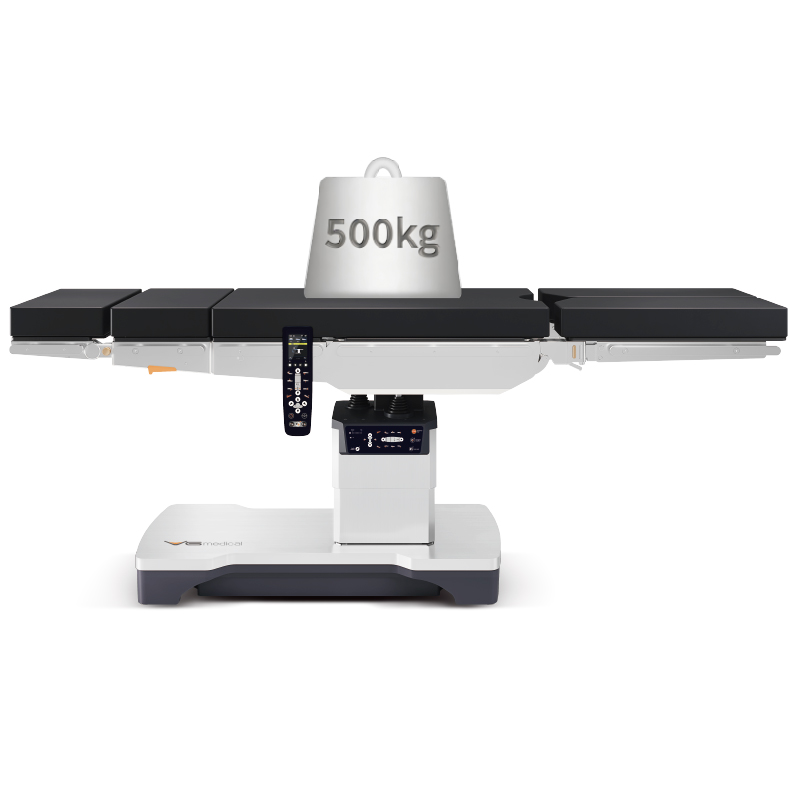
Electric vs. Hydraulic Surgical Table: Which Drive System Is Right for Your OR?
Sep 07, 2026
Electric surgiacal table
COMFORT 2000 Series
Best for Day Surgery/ Outpatient
Electric hydraulic surgical table
COMFORT 300 Series
Best for general OR/ Proven workhorse
Electric hydraulic surgical table
Vcare 7000 Series
Vcare 5000 Series
Best for Central OR
Ask most OR procurement teams what separates one surgical table from another, and the answer usually comes down to the drive system: electric or hydraulic. It sounds like a technical detail, but it is the single decision that shapes how the table performs, how much it costs to run, and which surgical specialties it can serve.
This guide breaks down how the two systems work, their real-world trade-offs, and a simple framework for deciding which one fits your operating room.
How the Two Drive Systems Work
The difference is in what makes the table move.
Electric surgical tables use electric motors and actuators to drive every movement — height, tilt, Trendelenburg, and section articulation. Control is electronic, typically through a hand pendant, remote, or integrated OR control system.
Hydraulic surgical tables use pressurized fluid. A pump (manual foot pump or electric pump) forces oil into cylinders, which extend to raise or position the table. The fluid does the heavy lifting.
A third option — the electro-hydraulic table — combines both: electric control with hydraulic power. It deserves its own section below, because it is the workhorse of heavy-load surgery.
Electric Surgical Tables: Pros and Cons
Electric tables are the default in most high-volume, general-purpose operating rooms today.
Pros:
· Precise, repeatable positioning — motor control allows fine micro-adjustments that hydraulic tables struggle to match.
· Fast — smooth, quick transitions between positions speed up room turnover.
· Quiet — no pump noise, which matters in delicate procedures and patient comfort.
· Programmable — many models store position presets and integrate with digital OR systems.
· Clean and low-maintenance — no hydraulic fluid to leak or seals to replace.
Cons:
· Higher upfront cost — motors, actuators, and control electronics add to the price.
· Power dependency — needs a stable electrical supply; battery backup is recommended.
· Load limits — standard electric tables may have lower articulated load capacity than electro-hydraulic equivalents.
Electric tables are the right starting point for general surgery, gynecology, urology, ENT, and other specialties that reward speed and precision.
Hydraulic Surgical Tables: Pros and Cons
Pure hydraulic tables are less common in high-end ORs but still fill a real niche.
Pros:
· Lower upfront cost — fewer electronic components mean a cheaper purchase.
· High load capacity — hydraulic cylinders excel at lifting heavy patients smoothly.
· No power required (manual models) — a foot or hand pump works even during outages.
Cons:
· Slower and less precise — positioning is coarser, and fine adjustments are harder.
· Physical effort — manual pumping is tiring for staff.
· Maintenance — seals and fluid lines can leak and need periodic service.
· Less integration — limited programmability and digital OR connectivity.
Hydraulic tables suit lower-budget facilities, backup units, or settings with unreliable power — not the high-turnover core of a modern surgical department.
Electro-Hydraulic: The Hybrid Worth Knowing
If your case mix includes orthopedics, trauma, bariatrics, or any heavy-load work, the electro-hydraulic table is often the best answer.
It uses an electric pump to pressurize the hydraulic system, giving you:
· The load capacity and stability of hydraulics.
· The electric control and precision of a motorized table.
· Smooth, jerk-free height travel — important when positioning an anesthetized patient.
The trade-off is cost and slightly higher maintenance than a pure electric table. But for heavy patients and demanding positions, that trade-off is almost always worth it.
Side-by-Side Comparison
Criterion
Electric
Electro-hydraulic
Hydraulic
Positioning precision
High
High
Medium
Load capacity
Medium–High
Highest
Medium–High
Speed
Fast
Medium
Slow
Noise
Low
Low–Medium
Medium
Power dependency
Full
Partial
None (manual)
Maintenance
Lower
Moderate
Moderate
Digital OR integration
Strong
Strong
Limited
Upfront cost
Higher
Higher
Lower
How to Decide: A Simple Decision Framework
Run your case mix through these three questions:
1. Do you perform heavy-load or orthopedic cases?Yes → electro-hydraulic. No → keep going.
2. Is room turnover speed and precision your priority?Yes → electric. A busy general OR that runs many short cases wins with electric speed.
3. Is budget tight or power unreliable?Yes → hydraulic (or electric with battery backup). A manual hydraulic table can serve as a low-cost backup or in resource-limited settings.
The short version:
· General surgery, high turnover → electric
· Orthopedics, trauma, bariatrics → electro-hydraulic
· Tight budget, backup, unstable power → hydraulic
Cost and Maintenance: The Real Difference
Purchase price is only part of the story.
· Electric tables cost more up front but less to maintain — no fluid, fewer seals. Over a 10–15 year life, they often come out ahead in total cost of ownership for high-volume ORs.
· Electro-hydraulic tables add the hydraulic system back in, so expect periodic seal and fluid service. The cost is justified by what they enable for heavy-load surgery.
· Hydraulic tables are cheapest to buy, but manual operation adds staff effort and slower turnover, which is a hidden cost in a busy department.
Always ask the supplier about local spare parts, service response time, and warranty coverage before committing — a table that is cheap to buy but hard to service will cost more over its lifetime.
Frequently Asked Questions
Which is better, an electric or hydraulic surgical table?It depends on your case mix. Electric tables are faster, more precise, and better for high-volume general surgery. Hydraulic (or electro-hydraulic) tables excel at heavy load capacity, making them better for orthopedics and bariatrics.
What is an electro-hydraulic surgical table?An electro-hydraulic table combines an electric pump with hydraulic cylinders. It delivers the heavy load capacity of hydraulics with the electric control and precision of a motorized table — the preferred choice for orthopedic and bariatric surgery.
Do electric surgical tables work during a power outage?Most electric tables require power to move and should have a battery backup. Manual hydraulic tables can be operated without electricity, which is useful in settings with unreliable power.
Are hydraulic surgical tables cheaper to maintain?Not necessarily. Hydraulic systems have seals and fluid lines that can leak and need periodic service. Electric tables avoid hydraulic fluid entirely and are often lower-maintenance over their lifetime.
How do I choose between the three types?Use this rule of thumb: electric for general surgery and high turnover, electro-hydraulic for orthopedics and heavy loads, and hydraulic for tight budgets or backup use. For a full evaluation of all factors, see our guide on how to choose a surgical table.
The Right Drive System Depends on Your Cases
There is no universally "best" surgical table — only the best table for your case mix. Electric wins on speed and precision; electro-hydraulic wins on load and stability; hydraulic wins on upfront cost and power independence.
At VG Medical, we manufacture electric, electro-hydraulic, and hydraulic operating tables — including the VCARE 5000 and VCARE 7000 series — all MDR CE certified and built on modular platforms. Whatever your specialties, we can help you match the drive system to the work you actually do.
Not sure which drive system fits your OR? Contact our team with your case mix and load requirements, and we'll recommend the right table.
 sales@vg-med.com
 Language