Types of Surgical Tables: A Complete Guide for Healthcare Facilities
Aug 21, 2026
The surgical table is the centerpiece of every operating room. It supports the patient, enables precise positioning, and directly impacts surgical outcomes. But not all surgical tables are created equal — different procedures, specialties, and facility requirements call for different types of surgical tables.
Whether you're equipping a new operating room, upgrading legacy equipment, or sourcing from a surgical table manufacturer for distribution, understanding the types of surgical tables available is the first step to making the right investment.
This guide covers every major classification — by power source, by surgical specialty, and by key features — to help you select with confidence.
What Is a Surgical Table?
A surgical table (also called an operating table or OR table) is a specialized medical device designed to support a patient during surgical procedures. It allows precise positioning adjustments — height, tilt, lateral roll, Trendelenburg, and section-specific articulations — so the surgical team can access the operative site safely and efficiently.
Modern surgical tables have evolved from simple manual mechanisms to advanced electro-hydraulic systems with radiolucent tabletops, memory position functions, and integrated safety features. The type of surgical table you choose determines positioning precision, imaging compatibility, weight capacity, and ultimately, OR efficiency.
Types of Surgical Tables by Power Source
1. Manual Surgical Tables
Manual operating tables use mechanical hand cranks or foot pumps for positioning. They are the most basic and affordable option, typically found in smaller clinics, field hospitals, or budget-constrained facilities.
Advantages:
Lower cost
No dependency on electrical power
Simple maintenance
Limitations:
Limited positioning precision
Physically demanding for OR staff
Fewer articulation options
Manual tables suit minor procedures and low-volume settings but are increasingly phased out in modern hospitals favoring powered systems.
2. Hydraulic Surgical Tables
Hydraulic surgical tables use foot-pedal-operated hydraulic pumps to adjust height and tilt. They bridge the gap between manual and fully electric systems, offering smoother operation without electrical dependency.
Advantages:
Smooth hydraulic positioning
No electrical power required
Moderate cost
Limitations:
Foot pedal operation can be fatiguing during long procedures
Limited programmability
Slower adjustments than electro-hydraulic systems
3. Electro-Hydraulic Surgical Tables
Electro-hydraulic surgical tables represent the current industry standard for general surgery. They combine hydraulic power with electric motor control, enabling button-operated, precise positioning across all axes.
Key Features:
Motorized height, Trendelenburg, lateral tilt, and section adjustments
Pendant or hand control for intuitive operation
Backup battery for emergency use
Modular tabletop sections for different procedures
Best For: General surgery, multi-specialty ORs, and hospitals requiring versatile, reliable positioning.
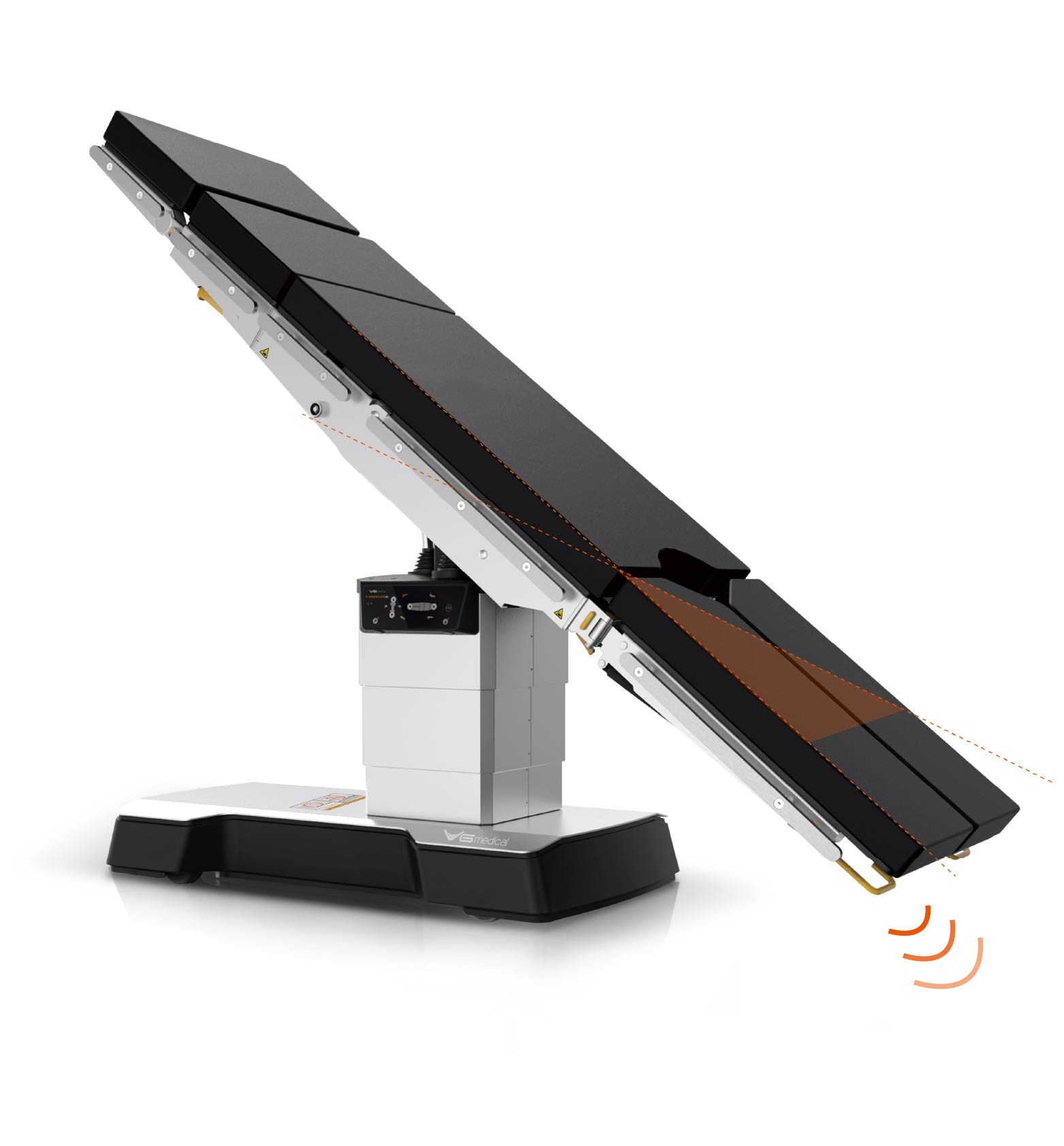
Models like the VG Medical VCARE 5000 exemplify this category — an electro-hydraulic surgical table with modular design, radiolucent tabletop, and C-arm compatibility, built for multi-discipline operating rooms.
4. Electric / Motorized Surgical Tables
Fully electric surgical tables use servo motors for all movements, offering the highest positioning precision and speed. Some advanced models feature memory positions, programmable presets, and even voice-activated controls.
Key Features:
All-electric actuation (no hydraulic fluid)
Programmable memory positions
Ultra-quiet operation
Integrated safety sensors
Best For: High-end hospitals, robotic surgery suites, and specialized centers requiring repeatable precision.
Types of Surgical Tables by Surgical Specialty
General Surgical Tables
General surgical tables are designed for versatility across a wide range of procedures — cardiovascular,gynecological, urological, gastrointestinal, and plastic surgery. They feature removable head sections, leg sections, and a broad accessory ecosystem for maximum adaptability.
Best For: Multi-specialty hospitals and general operating rooms.
Orthopedic Surgical Tablestest
Orthopedic tables (also called fracture tables or traction tables) are engineered for musculoskeletal procedures — hip fracture repair, femoral nailing, knee arthroscopy, and joint replacement. They provide traction capability, precise limb positioning, and often include a radiolucent top for intraoperative imaging.
Best For: Orthopedic departments and trauma centers.
Radiolucent / Imaging Surgical Tables
Radiolucent surgical tables are designed for procedures requiring intraoperative fluoroscopy or C-arm imaging. The tabletop is constructed from carbon fiber or other radiolucent materials that allow X-rays to pass through with minimal absorption, providing clear imaging without repositioning the patient.
Best For: Minimally invasive procedures, vascular surgery, pain management, and any procedure requiring real-time imaging.
Bariatric Surgical Tables
Bariatric tables are heavy-duty surgical tables designed for higher-weight patients. They feature reinforced structures, wider tabletops, and higher weight capacities (typically 450 kg / 1,000 lbs or more), along with powered transfer capabilities.
Best For: Bariatric surgery centers and hospitals serving diverse patient populations.
Neurosurgery Tables
Neurosurgical tables demand extreme positioning precision for delicate cranial and spinal procedures. They often integrate with imaging systems (MRI, CT) and may feature specialized head-fixation compatibility.
Best For: Neurosurgery departments and specialized neurological centers.
Key Features to Consider When Choosing a Surgical Table
When evaluating types of surgical tables for your facility, prioritize these critical features:
Weight Capacity — Ensures safe support for all patient populations; bariatric tables exceed 450 kg
Radiolucency — Enables intraoperative C-arm imaging without patient repositioning
Modularity — Allows tabletop reconfiguration for different surgical disciplines
Positioning Range — Determines accessible surgical positions (Trendelenburg, lateral tilt, reverse Trendelenburg, etc.)
Control System — Pendant, hand, or foot control affects OR workflow efficiency
Battery Backup — Ensures positioning capability during power failure
Accessories — Leg holders, arm boards, headrests — broader ecosystem means more versatility
Mobility — Mobile vs. stationary base affects OR layout flexibility
Choosing a Reliable Surgical Table Manufacturer
The type of surgical table you select matters — but equally important is who builds it. A qualified surgical table manufacturer brings:
Regulatory compliance: MDR CE certification, ISO 13485 quality management, and FDA compliance where applicable
Engineering depth: Proven electro-hydraulic system design, structural integrity, and long-term reliability
OEM/ODM capability: Customization for distributors who need white-label solutions
Global service network: Installation, training, spare parts availability, and after-sales support across your operating regions
Track record: Years of manufacturing experience, patent portfolio, and export history
VG Medical has been manufacturing surgical tables for over 20 years, holding 85 patents and MDR CE certification. With products exported to 50+ countries, VG Medical offers both standard surgical table models and full OEM/ODM services for global distributors seeking reliable manufacturing partnerships.
Conclusion
Understanding the types of surgical tables — from manual and hydraulic to electro-hydraulic and fully electric, from general-purpose to orthopedic, radiolucent, and bariatric — is essential for making an informed purchasing decision. The right table improves surgical access, enhances OR efficiency, and protects patient safety.
When sourcing, partner with a surgical table manufacturer that combines regulatory compliance, engineering depth, and global service capability. The investment in the right table — from the right manufacturer — pays dividends in every procedure for years to come.
Supine Positon
Prone Position
Beach Chair Position
Lateral Position
Knee Position
 sales@vg-med.com
 Language