 sales@vg-med.com
 Language




What Are You Looking For?


how to choose a surgical table — the types, the seven factors that matter most, and the questions to ask before you sign.
Choosing a surgical table is one of the most consequential equipment decisions an operating room team will make. The table is not a passive piece of furniture — it positions the patient, supports surgical access, and either enables or limits the imaging, specialty procedures, and workflow efficiency of your entire OR.
Yet buying teams often default to the cheapest quote or the brand they already know, without first defining what the table actually needs to do. This guide breaks down exactly how to choose a surgical table — the types, the seven factors that matter most, and the questions to ask before you sign.
A surgical table directly affects three things your hospital is measured on:
The wrong choice shows up as hidden cost: a table that cannot take a C-arm, an under-sized table that limits bariatric cases, or a drive system that cannot be serviced locally.
Before comparing brands, understand the categories. Surgical tables are generally grouped by drive system and by design architecture.
By drive system:
|
Type |
How it moves |
Best for |
|
Electric (electromechanical) |
Motors drive all movements |
High-volume ORs, precise micro-adjustments, remote control |
|
Electro-hydraulic |
Electric pump + hydraulic cylinders |
|
|
Hydraulic (manual pump) |
Foot/hand pump pressurizes oil |
Lower cost, areas with unstable power |
|
Manual (mechanical) |
Hand cranks |
Low-cost backup, limited budget |
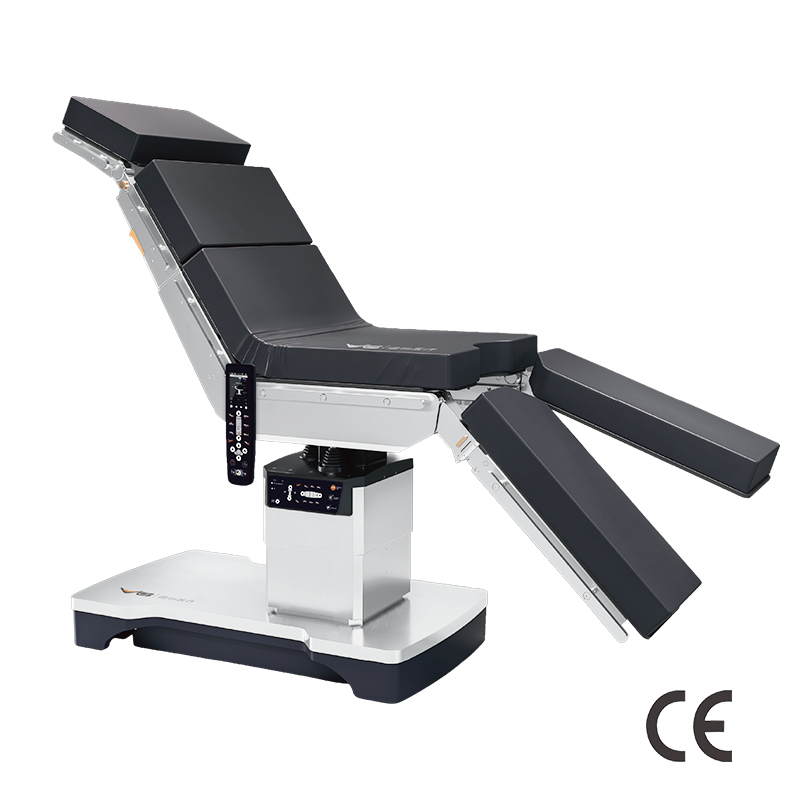
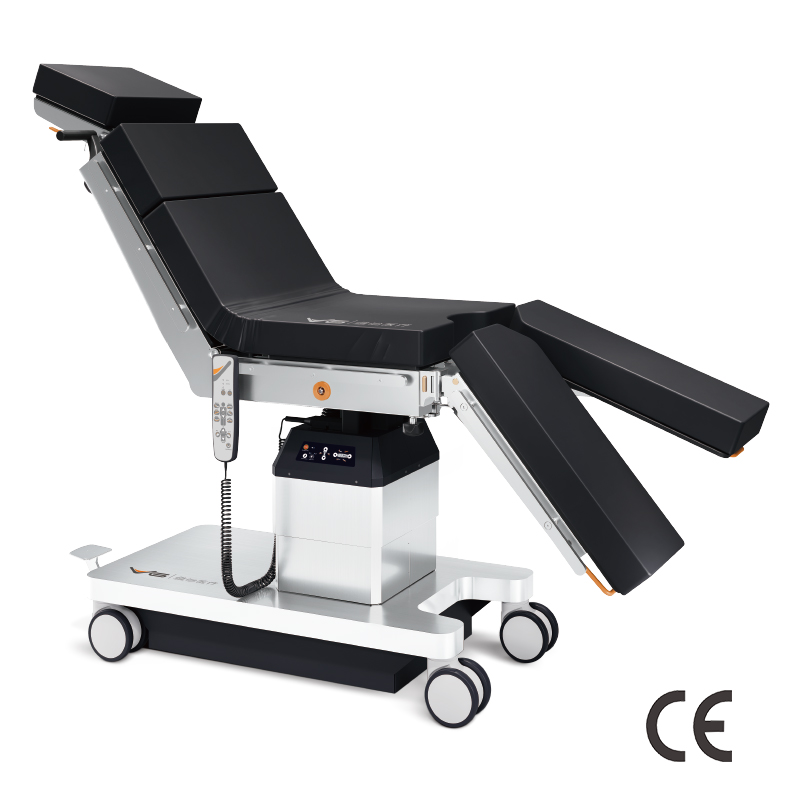
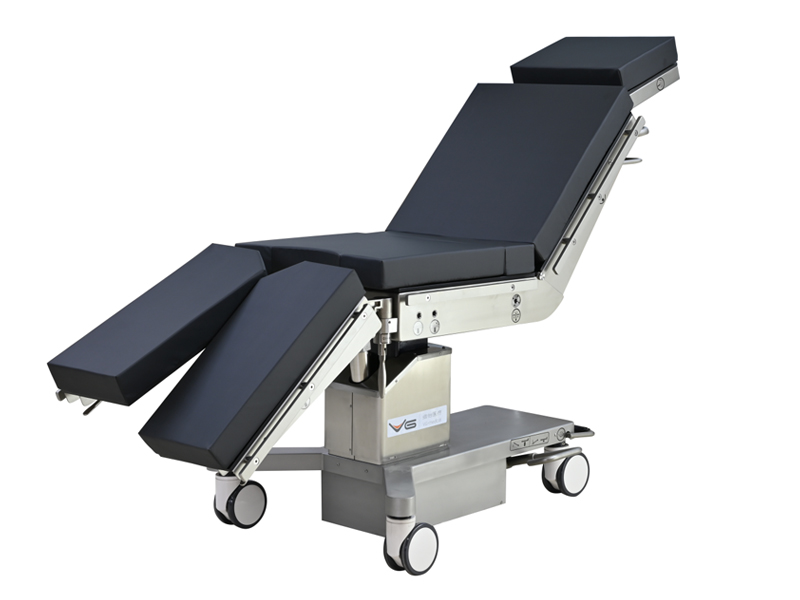
By architecture:
Most modern hospitals standardize on electric or electro-hydraulic modular tables, which is why the rest of this guide focuses there.
Load capacity is a safety spec, not a marketing number. Look for three figures:
· Rated lifting capacity — the maximum weight the table can safely raise, typically 250–450 kg on modern electro-hydraulic tables.
· Static load capacity — what the table holds when stationary (often higher than lifting capacity).
· Articulated load capacity — the weight the table can support while tilted or flexed, which is usually lower.
If your facility serves bariatric patients, confirm the table can articulate under high load without binding or strain — this is where cheaper hydraulic units often fall short.
Positioning flexibility is what separates a general table from one that can handle orthopedics, urology, neurosurgery, and gynecology. Evaluate:
· Height range — low enough for seated/ophthalmic work, high enough for tall surgeons; typical range is 600–1,000 mm.
· Trendelenburg and reverse Trendelenburg — degree of tilt for vascular, gynecologic, and laparoscopic cases.
· Lateral tilt and back/leg section articulation — the more independent sections, the more positions you can configure.
· Sliding tabletop (longitudinal travel) — critical for C-arm imaging clearance.
Ask for the full positioning specification sheet, not a brochure photo.
If you do fluoroscopy, trauma, or minimally invasive surgery, imaging compatibility is non-negotiable. Two things to verify:
· Radiolucent window — the tabletop must be transparent to X-rays along the imaging path. Carbon-fiber tabletops provide the best image clarity with minimal artifact.
· C-arm clearance — the base and column must not block the C-arm as it sweeps under and around the table. Sliding tops and open-base designs are essential here.
A table that is not C-arm compatible effectively locks your OR out of a growing share of procedures.
A modular platform protects your investment. A single base that accepts interchangeable tops — orthopedic traction, urology/lithotomy, carbon-fiber imaging, bariatric — lets one table serve multiple specialties instead of buying three tables.
When evaluating modularity, check how quickly attachments swap, whether the locking mechanism is secure, and how many accessory positions are available.
This is often the deciding factor. Quick comparison:
· Electric (electromechanical) — fast, precise, quiet; ideal for high-turnover ORs. Slightly higher upfront cost but lower maintenance.
· Electro-hydraulic — best load capacity and smoothness; excellent stability under heavy patients; the workhorse of orthopedics and bariatrics.
· Pure hydraulic — lower cost, no reliance on power; but slower, less precise, and heavier to operate.
Choose based on your case mix and power reliability, not on sticker price alone.
Surgical tables are high-touch surfaces in a sterile environment. Prioritize:
· Seamless, gap-free surfaces — fewer crevices for fluid and pathogens to collect.
· Antimicrobial or non-porous coatings — easy to wipe down between cases.
· Removable pads and rails — cleanable or sterilizable components.
· Rounded edges and smooth welding — reduces residue traps and makes wiping faster.
Faster, more reliable cleaning means faster room turnover and lower infection risk.
Do not compromise here. Confirm the table is certified for your market:
· MDR CE certification — mandatory for the EU and widely accepted globally.
· IEC 60601 series — electrical safety for medical electrical equipment.
· ISO 13485 — quality management system for medical devices.
Certifications are evidence that the manufacturer's design, materials, and quality system have been independently audited — not just claimed.
|
Electric |
Electro-hydraulic |
Hydraulic |
|
|
Precision |
High |
High |
Medium |
|
Load capacity |
Medium–High |
Highest |
Medium |
|
Speed |
Fast |
Medium |
Slow |
|
Power dependency |
Full |
Partial |
None (manual) |
|
Maintenance |
Lower |
Moderate |
Moderate |
|
Upfront cost |
Higher |
Higher |
Lower |
Bottom line: for a busy general OR, an electric table gives speed and precision. For orthopedics, bariatrics, and heavy-load work, electro-hydraulic is the safer bet. Pure hydraulic suits lower-budget or power-unstable settings.
A surgical table's real cost is spread over 10–15 years of service. When comparing quotes, factor in:
· Serviceability — are spare parts and trained technicians available in your region? A table that needs to be shipped overseas for repair has a hidden cost.
· Warranty and support — what is covered, and for how long?
· Training — does the supplier train your OR staff on safe operation and positioning?
· Upgradeability — can you add modular tops later without replacing the base?
· Durability — check materials, welding quality, and rated duty cycles.
A cheaper table that is down for a month or cannot be upgraded costs far more than the savings.
· Vague or missing load specifications — if the seller cannot provide rated/static/articulated load figures, walk away.
· No imaging clearance documentation — ask for C-arm clearance drawings, not assurances.
· No local service network — a great price means nothing if repairs take months.
· Certifications not verifiable — ask for certificate numbers you can check against the issuer.
· Limited positioning range — a table that cannot tilt or articulate will limit your surgeons.
· Rated lifting capacity meets your heaviest patient class
· Articulated load capacity documented
· Positioning range covers all your specialties (height, Trendelenburg, lateral tilt)
· C-arm compatible, with radiolucent window and documented clearance
· Modular attachments available for future specialties
· Drive system matches your case mix and power reliability
· Seamless, cleanable surfaces for infection control
· MDR CE and IEC 60601 certified (verifiable certificate numbers)
· Local service, spare parts, and staff training available
· Transparent total cost of ownership, not just purchase price
What is the standard weight capacity of a surgical table?
Most modern surgical tables have a rated lifting capacity between 250 kg and 450 kg, with static load capacity often higher. Always confirm the articulated load capacity if you serve heavier patients, since the table must be able to tilt and flex safely under load.
What is the difference between an electric and a hydraulic surgical table?
An electric table uses motors for precise, fast, quiet positioning and needs a power supply. A hydraulic table uses pressurized fluid (operated by pump or electric pump) for high load capacity and smooth travel. Electro-hydraulic tables combine both: electric control with hydraulic lifting power, which is ideal for heavy-load work like orthopedics.
Are surgical tables compatible with C-arm imaging?
Not all of them. C-arm compatibility requires a radiolucent tabletop (often carbon-fiber) and an open base or sliding top that gives the C-arm clearance to sweep around the patient. If you perform fluoroscopy or minimally invasive surgery, make C-arm compatibility a hard requirement.
What certifications should a surgical table have?
For most global markets, look for MDR CE marking (EU), IEC 60601 electrical safety compliance, and ISO 13485 quality management. Ask for verifiable certificate numbers rather than relying on marketing claims.
How often should a surgical table be serviced?
Follow the manufacturer's schedule, but plan for at least an annual inspection of the drive system, hydraulic seals, electrical safety, and positioning mechanisms. Heavily used tables may need more frequent checks.
Can one surgical table serve multiple specialties?
Yes — a modular table with interchangeable tops (orthopedic, urology, carbon-fiber imaging, bariatric) lets a single base cover multiple specialties. This is one of the most effective ways to lower total cost of ownership.
Selecting a surgical table is a decision you will live with for over a decade. Define your case mix first, then evaluate load capacity, positioning, imaging compatibility, modularity, drive system, cleanability, and certifications against that reality — not against the lowest quote.
At VG Medical, we have designed and manufactured surgical tables for more than 20 years, with over 85 patents and products exported to 50+ countries. Our operating tables — including the VCARE 5000 and VCARE 7000 series, and the COMFORT 300 — are MDR CE certified, built on modular platforms, and engineered for precise positioning and easy integration into modern digital OR workflows.
Need help specifying the right table for your OR? Contact our team for a detailed positioning specification, C-arm clearance drawings, and a tailored recommendation.
leave a message
Scan To Wechat :

Scan To WhatsApp :